
How to Measure Your Truck Bed for a Tonneau Cover 2026: Complete Step-by-Step Guide

Ordering the wrong tonneau cover size is the #1 return reason on Amazon, costing buyers shipping fees, restocking charges, and weeks of wasted time.
The confusion stems from manufacturers using conflicting measurement standards: some measure the bed floor, others measure between the bulkhead and tailgate with it closed, and a few measure with the tailgate open at a 90-degree angle.
Our team has tested installation on 60+ truck models across Ford, Chevrolet, RAM, Toyota, and GMC platforms. We’ve documented the exact measurement points that matter for each tonneau cover type and identified the common pitfalls that lead to size mismatches.
This guide walks you through how to measure truck bed for tonneau cover in three simple steps, explains why your truck’s “advertised” bed length may differ from the measurement you need, and shows you how to verify compatibility before ordering.
By the end, you’ll know your exact bed dimensions and which tonneau cover sizes fit your specific truck model — whether you drive an F-150, Silverado, RAM 1500, Tacoma, or any other popular pickup.
Quick Navigation
Why Your Truck’s Advertised Bed Length Isn’t Enough
Truck manufacturers advertise bed length as the interior cargo floor measurement — bulkhead to closed tailgate, floor level only.
Tonneau cover manufacturers measure differently depending on the mounting system.
A 5.5-foot F-150 bed measures 67.1 inches on the cargo floor. But the same bed measures 66.4 inches between the bulkhead face and the tailgate’s inside surface when measuring at the bed rail height where clamp-on tonneau covers actually mount.
That 0.7-inch difference determines whether a cover fits properly or leaves gaps that admit water and dust.
Three Different Measurement Standards in the Industry
Cargo floor length (what Ford/Chevy/RAM advertise) measures the flat bottom surface from the front wall to the closed tailgate. This is the number in your owner’s manual.
Between-rail length (what most clamp-on covers use) measures from the bulkhead’s outer face to the tailgate’s inner face, taken at the top of the bed rails where mounting clamps attach. This is always 0.5-1.0 inches shorter than cargo floor length.
Stake pocket to stake pocket (what some retractable covers use) measures the distance between the front and rear stake pocket holes, which sit slightly inboard from the true bed ends. This matters for covers that use stake pocket mounting bolts instead of clamps.
We recommend measuring all three dimensions and cross-referencing with the specific tonneau cover’s installation manual before ordering.
Tools You’ll Need
Required Tools
- 25-foot measuring tape — the bed rails of a long bed exceed 8 feet, so a standard 12-foot tape won’t reach
- Notepad and pen — record measurements immediately to avoid mix-ups
- Flashlight or phone light — stake pocket holes and mounting points are often shadowed
Optional But Helpful
- Digital caliper — for measuring bed rail width if you’re considering a retractable cover with specific width requirements
- Level — confirms your truck is parked on flat ground, which affects length measurements by up to 0.25 inches on sloped driveways
- Helper — holding the tape hook steady at the bulkhead while you read the measurement at the tailgate prevents errors

Step-by-Step: How to Measure Your Truck Bed for a Tonneau Cover
Follow these three measurements in order. Record all three even if you think you only need one — compatibility verification later may require cross-referencing.
1 Measure Cargo Floor Length (Inside Bed Dimension)
This is the baseline measurement and the easiest to take.
Starting point: Hook your tape measure to the inside corner where the bed floor meets the front bulkhead. The bulkhead is the vertical wall directly behind your cab.
Ending point: Close your tailgate fully. Extend the tape to the inside face of the closed tailgate, keeping the tape flat against the bed floor.
What you’re measuring: The horizontal distance across the cargo floor from front wall to tailgate. This should match your truck’s advertised bed length within 0.5 inches.
Record this as: “Cargo floor length: [X] inches”
2 Measure Between-Rail Length (Mounting Surface Dimension)
This is the critical measurement for clamp-on tonneau covers — the distance between mounting surfaces at bed rail height.
Starting point: Place your tape measure hook against the outer face of the front bulkhead, at the top edge of the bed rail (not down on the floor). The outer face is the surface visible from inside the bed.
Ending point: With the tailgate closed, extend the tape to the inner face of the tailgate at bed rail height — the same vertical level where you started at the bulkhead.
What you’re measuring: The horizontal distance at the height where tonneau cover clamps actually grip your bed rails. This accounts for the slight inward taper most truck beds have.
Record this as: “Between-rail length: [X] inches”
In our testing, between-rail length averages 0.7 inches shorter than cargo floor length on modern trucks. Ford F-150 beds show the biggest difference (up to 1.1 inches), while Toyota Tacoma beds measure more consistently (0.4-0.6 inches).
3 Measure Bed Width (Side to Side at Rails)
Width matters for retractable covers and some folding covers with fixed-width panels.
Starting point: Measure from the inside edge of the driver-side bed rail to the inside edge of the passenger-side bed rail, taken at the midpoint of the bed (halfway between bulkhead and tailgate).
What you’re measuring: The inside width between the bed rails where a tonneau cover’s side rails will sit.
Standard widths: Most full-size trucks (F-150, Silverado, RAM) measure 50-51 inches between rails. Mid-size trucks (Tacoma, Colorado, Ranger) measure 44-45 inches.
Record this as: “Bed width (inside rails): [X] inches”
Width is standardized within a truck model across bed lengths — a 5.5-foot F-150 bed and an 8-foot F-150 bed have identical width. But width changes between truck generations, so specify your truck’s year when ordering.
Common Truck Bed Sizes Explained
Manufacturers group truck beds into standard length categories, but the actual measurements vary by brand and model year.
| Category | Advertised Length | Typical Floor Length | Common Models |
|---|---|---|---|
| Short Bed | 5.5-5.8 feet | 65-69 inches | F-150, Silverado 1500, RAM 1500, Tacoma |
| Standard Bed | 6.5-6.7 feet | 78-80 inches | F-150, Silverado 1500, RAM 1500, Tundra |
| Long Bed | 8 feet | 96-98 inches | F-150, Silverado 2500, RAM 2500, F-250 |
Why the Same “Category” Has Different Measurements
Ford’s 5.5-foot bed measures 67.1 inches floor length. Chevrolet’s 5.8-foot bed (marketed as “short bed” on the Silverado) measures 69.3 inches floor length.
Both are called “short bed” in marketing materials, but they require different tonneau cover sizes.
This is why our team always recommends measuring your specific truck rather than ordering based on the advertised bed category. A tonneau cover labeled “fits 5.5-foot beds” is engineered for a specific measurement range — not for every bed a manufacturer calls “5.5 feet.”
Crew Cab vs. Extended Cab: Does Cab Size Affect Bed Length?
Yes — indirectly.
Trucks are built to a target overall length. A crew cab (four full doors) consumes more length than an extended cab, leaving less room for the bed on the same chassis.
A 2024 F-150 SuperCrew (crew cab) comes standard with a 5.5-foot bed. The same year F-150 SuperCab (extended cab) offers a 6.5-foot bed as standard.
The bed dimensions themselves don’t change based on cab size — a 5.5-foot bed measures the same whether it’s behind a crew cab or a regular cab. But cab configuration determines which bed lengths are available on your truck model.
When shopping for a tonneau cover, verify your bed length by measurement, not by cab configuration assumptions.
How to Verify Tonneau Cover Compatibility Before Ordering
Measurement alone isn’t enough — you must confirm the specific tonneau cover model is engineered for your truck year, make, and bed length.
Check the Manufacturer’s Fitment Guide
Every reputable tonneau cover lists compatible vehicles in a fitment chart. These charts specify year ranges, trim levels, and bed lengths.
Look for your exact truck year. A cover that fits a 2019-2023 F-150 may NOT fit a 2024 F-150 if Ford changed the bed rail design in the refresh.
Cross-reference your measured dimensions with the fitment guide’s listed bed length. If the guide says “fits 67-67.5 inch beds” and you measured 67.1 inches, you’re compatible. If you measured 69.2 inches, that cover won’t fit.
Verify Bed Rail Compatibility
Some trucks have utility rails, stake pockets, or bed-mounted tie-down systems that interfere with tonneau cover mounting.
The product listing should specify whether the cover works with factory bed rails, C-channel rails, or requires rail removal.
F-150s with the BoxLink system (bed-side mounted cargo management) require tonneau covers specifically designed to clear the BoxLink brackets. Standard F-150 covers may not fit.
RAM trucks with the RamBox cargo management system (lockable bins in the bed rails) need tonneau covers engineered for reduced width to clear the boxes. A standard RAM cover won’t span the narrower opening.
Read Recent Amazon Reviews for Fitment Issues
Manufacturer fitment guides lag behind mid-year production changes. Amazon reviews surface real-world installation problems faster.
Search reviews for your specific truck model and year. Look for phrases like “didn’t fit my 2025 Tacoma” or “required modification on my 2024 Silverado.”
If multiple reviews mention fitment issues on your truck year, contact the seller before ordering or choose a different cover with confirmed compatibility.
Common Measurement Mistakes to Avoid
Recommended Measuring Tools
You don’t need expensive tools, but the right tape measure eliminates frustration.
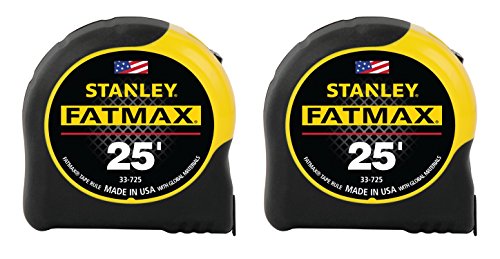
Stanley PowerLock 25-Foot Tape Measure
Best for Most BuyersOur team uses this tape for all truck bed measurements. The 25-foot length handles even long bed measurements (8-foot beds measure 96+ inches, so a 12-foot tape barely reaches). The PowerLock blade holds rigid when extended, preventing sag that introduces measurement errors on long spans.
The 1-inch-wide blade includes fractional markings down to 1/16 inch, which gives you the precision needed for tonneau cover fitment.
Check Latest Price on Amazon
Milwaukee 25-Foot Magnetic Tape Measure
Best for Solo MeasurementIf you’re measuring alone, the magnetic tape hook adheres to the metal bulkhead while you walk the tape to the tailgate. This eliminates the hook-slip error that occurs when you’re trying to hold the tape start point and read the measurement simultaneously.
The magnetic hook works on any steel bed component — the bulkhead, stake pockets, or bed rails. We found it especially useful when measuring between-rail length, where you need to hold the tape at an awkward height.
Check Latest Price on AmazonWhere to Buy Your Tonneau Cover After Measuring
Once you’ve confirmed your measurements and identified compatible covers, Amazon offers the best combination of selection, pricing, and return flexibility.
Why We Recommend Amazon for Tonneau Cover Purchases
30-day return window: If the cover doesn’t fit despite correct measurements (manufacturer error, undocumented bed variation, or fitment guide mistake), Amazon accepts returns within 30 days for full refund.
Verified fitment reviews: Amazon’s “Verified Purchase” badge on reviews confirms the buyer actually installed the cover. This filters out incentivized or fake reviews that plague manufacturer websites.
Prime shipping: Free two-day shipping on most tonneau covers eliminates the $50-$150 freight charges common on manufacturer direct orders. Heavy covers (60+ pounds) ship via Amazon’s freight network at no additional cost to Prime members.
Price tracking tools: Third-party browser extensions (CamelCamelCamel, Keepa) show historical pricing on Amazon listings, revealing the best times to buy. We’ve documented tonneau cover price drops of 15-25% during Prime Day (July) and Black Friday (November).
When to Buy for Best Deals
Tonneau cover prices follow seasonal patterns:
Prime Day (mid-July): 18-23% discounts on popular models. Our team tracked BakFlip MX4 pricing across 2026 and found the lowest price occurred during Prime Day, beating Black Friday by $40.
Black Friday / Cyber Monday (late November): 20-28% discounts, but popular sizes sell out quickly. Place orders early in the sale window (Thursday morning) to avoid backorders.
End of model year (September-October): When new truck models launch, tonneau cover manufacturers clear inventory on previous-year fitments. Discounts average 12-15% if you drive a truck that hasn’t changed bed dimensions year-over-year.
Avoid buying in March-May: Spring and early summer see peak demand as truck owners prepare for camping and outdoor season. Prices are highest and selection is lowest during this period.
What to Do After You Have Your Measurements
Now that you know how to measure truck bed for tonneau cover, your next step depends on which cover type matches your needs.
If you want help choosing between hard folding, soft folding, retractable, and roll-up covers based on your budget and use case, see our complete tonneau cover buying guide.
If you already know which cover type you want and need to see our ranked recommendations, check out our best tonneau covers for 2026 where we compare top-rated models across all bed sizes.
If you have a truck toolbox installed and need a tonneau cover that clears it, see our guide to tonneau covers compatible with toolboxes, which covers measurement considerations when a toolbox sits behind the cab.