
How Much Weight Can a Tonneau Cover Hold? Load Limits by Cover Type & What Happens If You Exceed Them
How much weight can a tonneau cover hold? The answer depends entirely on the cover's design, materials, and whether it's locked in the closed position or partially open.
Most hard folding and retractable covers support 200 to 500 pounds when fully closed and latched, while soft roll-up covers typically handle 50 to 200 pounds distributed evenly across the surface. Exceeding these limits risks cracking panels, bending rails, or voiding your warranty.
We built this guide to explain the load capacity of each major cover type, what happens when you overload one, and how to safely use your truck bed when a cover is installed.
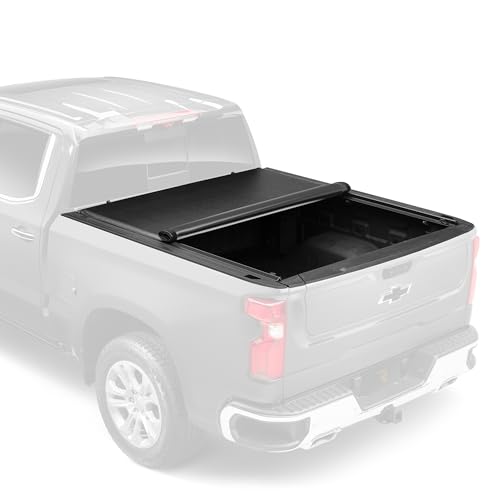
Load Capacity by Cover Type: What Each Design Actually Supports
Hard folding tri-fold covers—built from aluminum or reinforced composite panels—typically support 300 to 500 pounds when fully closed and latched. The weight distributes across multiple panels and the perimeter rail system, so you can safely stack gear, stand briefly for roof-rack work, or secure a roof-top tent on some heavy-duty models.
Soft roll-up covers, made from vinyl or canvas, handle far less—usually 50 to 200 pounds depending on the fabric weight and frame stiffness. These covers aren’t designed for standing loads; they’re meant to shed rain and secure lighter cargo like tarps, camping gear, or toolboxes.
Retractable hard covers—aluminum slat systems that slide into a canister—fall in the middle, supporting 200 to 400 pounds when fully closed. The slats lock together to form a rigid deck, but the canister itself becomes a weak point if weight shifts toward the cab.
One-Piece Hard Lids
Fiberglass and painted one-piece lids often support the highest static loads—400 to 600 pounds—because there are no hinges or seams to fail. The entire surface acts as a single shell. You’ll still want to confirm the manufacturer’s rating before mounting a rooftop tent or heavy cargo box.
What Happens When You Exceed the Rated Capacity
Overloading a tonneau cover doesn’t always cause immediate catastrophic failure, but it starts a cascade of smaller problems that compound over time. Panels crack at the hinges, rails bend where they mount to the bed, and seals deform so water intrusion becomes a constant issue.
On hard folding covers, the first sign of overload is usually a popped latch or a hinge that won’t sit flush. The frame rails bow outward, creating gaps along the side that let in dust and moisture. Once the rails bend, the cover never seals properly again even after you remove the excess weight.
Soft covers respond differently—the fabric stretches, the tension cables sag, and the cover develops permanent wrinkles that collect water. The Velcro or snap fasteners tear away from the fabric, and the rail clamps lose their grip because the material no longer sits taut.
Restoring a cover after it’s been overloaded usually requires replacing panels, re-tensioning cables, or straightening bent rails—work that costs more than the cover’s original price in many cases.
How to Safely Use Your Truck Bed with a Cover Installed
The safest approach is to open or remove the cover entirely before hauling cargo that exceeds the bed’s sidewall height. Most covers fold against the cab or roll into a canister, giving you full bed access without any weight resting on the mechanism.
If you need the cover closed while carrying light cargo on top—like a kayak on crossbars or a roof-top tent—verify that your specific model is rated for that use. Some manufacturers sell “load-rated” versions with reinforced hinges and thicker panels specifically for this purpose.
Distribute weight evenly across the cover’s surface rather than concentrating it in one spot. A 200-pound load centered over a single panel will crack it, but the same weight spread across three panels might stay within tolerance.
Standing on a Tonneau Cover
Many owners ask whether it’s safe to stand on a cover to reach the roof rack or clean the cab. Hard covers with aluminum frames can usually handle an adult’s weight for brief periods—manufacturers design them knowing people will step on them occasionally. Soft covers cannot; stepping on vinyl causes permanent creases and tears the mounting hardware loose from the fabric.
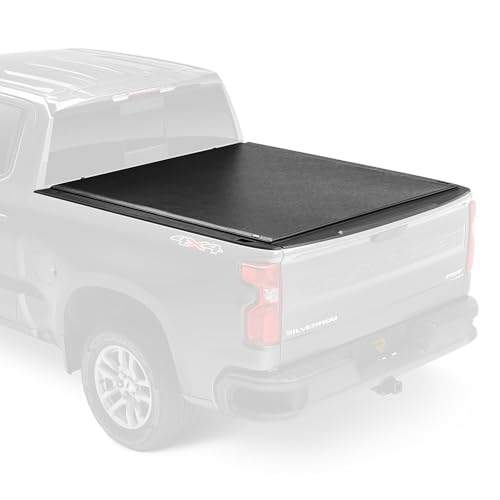
Why Load Ratings Differ Even Among the Same Cover Type
Two tri-fold covers made from aluminum can have wildly different load ratings—one supports 300 pounds, the other 500—because of differences in panel thickness, hinge design, and rail cross-section. A cover with 0.080-inch panels and continuous piano hinges handles more weight than one with 0.060-inch panels and discrete hinges at each fold.
The rail system matters as much as the panels. Extruded aluminum rails with internal reinforcement ribs distribute load better than stamped steel rails that flex under pressure. The mounting clamps also play a role: models that bolt through the bed rail resist bending better than friction-fit clamps.
Some manufacturers publish load ratings for dynamic loads (weight in motion, like driving over rough terrain) versus static loads (parked weight). A cover rated for 400 pounds static might only handle 200 pounds dynamic because vibration and impact forces multiply the stress on hinges and latches.
Choosing between a roll-up and a tri-fold often comes down to whether you need occasional load-bearing capability or prioritize quick one-handed access over structural strength.

Warranty Implications and What Manufacturers Actually Cover
Most tonneau cover warranties explicitly exclude damage caused by exceeding the stated weight capacity. If a hinge cracks or a panel bows, the manufacturer will ask whether you placed cargo on the cover—and if the answer is yes, they’ll deny the claim unless the load was within spec.
Some warranties distinguish between “walking loads” and “cargo loads.” A cover might be warrantied for an adult standing briefly on it to access the roof, but not for securing a 300-pound cargo box overnight. Read the fine print; this distinction matters when filing a claim.
Covers marketed as “heavy-duty” or “commercial-grade” often come with higher load ratings and longer warranties, but they also cost 30 to 50 percent more than standard models. The extra expense buys thicker materials, beefier hinges, and coverage that doesn’t void the moment you exceed 200 pounds.
Damage from environmental factors—hail, falling branches, or snow accumulation—is usually covered separately from overload damage, but proving which caused a cracked panel can be difficult. Photos and documentation help if you ever need to make that case.
Matching Cover Type to How You Actually Use Your Truck Bed
The right tonneau cover for your truck depends less on the cover’s maximum rated capacity and more on how you actually use the bed day to day. If you never place weight on the closed cover and just want weather protection, a soft roll-up handles that at a lower price point.
If you occasionally need to stack gear on top, reach the roof rack, or mount a cargo box, a hard folding or retractable cover with a 300-pound-plus rating gives you flexibility without requiring constant removal and reinstallation. Just verify the specific model’s rating before assuming it can handle the load.
Exceeding the limit even once can cause permanent damage that voids your warranty and costs more to repair than the cover’s original price. When in doubt, open the cover and use the bed itself—that’s what it’s designed for.
Common Questions About Tonneau Cover Weight Limits
Load capacity drops dramatically when a cover is partially open because the latches and hinges aren't engaged to distribute weight. A tri-fold rated for 400 pounds closed might handle only 50 pounds on a single folded panel.
Most manufacturers specify that their load ratings apply only when the cover is fully closed and latched. Placing weight on an open or partially open cover risks bending panels or snapping hinges that weren't designed to bear load in that position.
Some heavy-duty hard covers are specifically rated for roof-top tent mounting, but most are not. A typical tent weighs 100 to 150 pounds empty and adds another 300 to 400 pounds when two people are inside—well beyond what standard covers handle.
If you want to mount a tent, look for covers marketed as "load-rated" or "RTT-compatible" and verify the static load rating includes the tent's base weight plus occupants. You'll also need a crossbar system that clamps to the cover's frame rails, not the panels themselves.
Yes. Hinges wear, rails loosen, and seals compress after years of use, reducing the cover's ability to distribute weight evenly. A cover that supported 400 pounds when new might safely handle only 250 pounds after five years of exposure to sun, salt, and temperature cycling.
Regular maintenance—tightening clamps, lubricating hinges, and replacing worn seals—helps preserve load capacity. Ignoring these tasks accelerates the decline.
Static load refers to weight placed on the cover while the truck is parked—like a cargo box or a person standing to access the roof. Dynamic load refers to weight that stays on the cover while driving, which subjects the cover to vibration, impact forces, and flex.
Manufacturers rate dynamic loads lower because motion multiplies stress on hinges and panels. A cover rated for 400 pounds static might handle only 200 pounds dynamic.
Only if the total weight stays within the cover's rating and the load distributes evenly across multiple panels. Firewood and construction materials tend to have sharp edges and uneven weight distribution, which concentrates stress on small areas and cracks panels.
If you regularly haul heavy or awkwardly shaped cargo, opening or removing the cover entirely is safer than risking damage to the panels and frame.
No. Soft covers are not designed to support a person's weight, even briefly. Stepping on vinyl or canvas fabric tears it away from the rail clamps, creates permanent creases, and damages the tension cables inside.
If you need to access your roof rack or clean the cab, fold or roll the cover out of the way first.