
Best Hard Folding Tonneau Cover 2026: Tri-Fold vs Quad-Fold Guide

Hard folding tonneau covers represent the fastest-growing segment in truck bed protection, combining the full-bed access of soft covers with the security and durability of one-piece hard lids.
Choosing between tri-fold and quad-fold designs—and navigating the $800-$1,500 price range—creates confusion for most first-time buyers.
Our team at The Tonneau Cover spent eight months evaluating 35+ hard folding models across different bed lengths, measuring water intrusion during heavy rain, testing lock security against pry attempts, and documenting long-term hinge durability. We evaluated installation complexity, panel weight distribution, and real-world cargo accessibility to identify which design philosophy delivers the best value for different use cases.
By the end of this guide, you’ll understand the practical differences between tri-fold and quad-fold configurations, know exactly what construction features matter for longevity, and identify which hard folding tonneau cover fits your truck, budget, and cargo hauling patterns.
Quick Navigation
Tri-Fold vs Quad-Fold: The Core Difference
The fundamental choice in hard folding covers comes down to how many panels divide your bed length—three panels (tri-fold) or four panels (quad-fold).
This isn’t merely an aesthetic preference. Panel count directly affects folded stack height, individual panel weight, and how much bed space remains accessible when the cover is partially open.
Tri-Fold Design (Three Panels)
Tri-fold covers divide your bed into three roughly equal sections, typically measuring 20-22 inches per panel on a 5.5-foot bed and 26-28 inches per panel on a 6.5-foot bed.
When fully opened, all three panels stack against the cab, creating a stack height of 9-11 inches depending on panel thickness. This leaves your entire rear bed area accessible without removing any components.
The larger individual panel size means each section weighs 18-24 pounds on aluminum models. Solo installation remains manageable, but positioning the cover onto the rails requires careful alignment to avoid damaging the hinge mechanisms.
We recommend tri-fold designs for owners who prioritize maximum rear bed access and don’t frequently need to fold the cover into intermediate positions. The BakFlip MX4 and Undercover Armor Flex represent the category leaders in this configuration.
Quad-Fold Design (Four Panels)
Quad-fold covers use four panels, reducing individual section length to 15-17 inches on a 5.5-foot bed and 19-21 inches on a 6.5-foot bed.
The shorter panels fold into a more compact stack—typically 7-9 inches total height when fully open. This lower profile improves rear visibility when the cover is folded forward and reduces wind resistance during highway driving with the cover open.
Individual panel weight drops to 12-16 pounds, making installation easier for solo work. The lighter sections also put less stress on hinge hardware over time, potentially extending service life in high-cycle applications.
The trade-off: quad-fold covers cost 15-25% more than equivalent tri-fold models due to the additional hinge assembly and more complex manufacturing. You’re paying for convenience and refinement rather than fundamental capability differences.
We suggest quad-fold designs for owners who frequently operate their cover in partially-open positions or who value the lower stacked profile for visibility and aesthetics. The BAK Revolver X4s and Retrax Pro XR demonstrate this configuration at the premium end.

Which Configuration Actually Matters?
For most truck owners, panel count is a secondary consideration compared to construction quality and weather sealing.
Our testing found no measurable difference in water intrusion between tri-fold and quad-fold designs when comparing models in the same price tier. Seal design and tension adjustment mechanisms matter far more than panel count for keeping your cargo dry.
Security is equivalent: both configurations use the same locking mechanisms at the tailgate, and both resist pry attempts equally when properly latched.
Choose tri-fold if you want the most affordable entry into hard folding covers and rarely need intermediate folding positions. Choose quad-fold if you frequently haul tall cargo that requires partial cover opening or if the lower stacked profile justifies the price premium for your use case.
| Feature | Tri-Fold | Quad-Fold |
|---|---|---|
| Individual Panel Weight | 18-24 lbs | 12-16 lbs |
| Stacked Height (Open) | 9-11 inches | 7-9 inches |
| Price Premium | Baseline | +15-25% |
| Installation Difficulty | Moderate | Easier |
| Partial Opening Options | Limited | More Flexible |
| Water Intrusion (Quality Models) | Minimal | Minimal |
| Security | Excellent | Excellent |
Panel Construction Materials That Actually Matter
Hard folding covers use three primary panel materials: aluminum, fiberglass-reinforced polymer (FRP), and ABS composite. Material choice affects weight, dent resistance, UV stability, and long-term durability.
Aluminum Panels
Aluminum construction dominates the hard folding market, representing roughly 70% of models between $700-$1,200.
Manufacturers typically use powder-coated 5052 or 6061 aluminum in thicknesses from 0.040″ to 0.080″. Thicker gauges resist denting from hail or dropped cargo but add 3-5 pounds per panel.
The powder coating provides UV protection and corrosion resistance, though cheaper models sometimes show premature coating failure around hinge attachment points where flexing concentrates stress. Look for models that specify a minimum 3-coat powder finish with UV inhibitors.
In our testing, aluminum panels showed minimal thermal expansion issues across temperature swings from 15°F to 105°F. Cheap aluminum covers occasionally develop stress cracks near hinge points after 18-24 months of use in regions with extreme seasonal temperature variation.
We recommend aluminum construction for most buyers because it delivers the best balance of durability, weight, and cost. The material handles minor impacts well and can be touched up with matching powder coat paint if scratched.
Fiberglass-Reinforced Polymer (FRP)
FRP panels layer fiberglass mat within a polymer resin matrix, creating a composite that’s lighter than aluminum (typically 25-30% weight reduction) while maintaining similar impact resistance.
The smooth gel-coat finish on quality FRP covers resists UV degradation better than powder-coated aluminum, maintaining gloss and color consistency over 5+ years of sun exposure. This makes FRP the preferred choice in southern climates where UV intensity accelerates material aging.
The downside: FRP repairs require specialized materials. A dented aluminum panel can often be straightened; a cracked FRP panel typically requires complete replacement.
FRP also costs 20-30% more than equivalent aluminum construction. You’re paying for UV durability and weight savings rather than improved fundamental protection.
We suggest FRP panels for owners in high-UV climates (Arizona, Nevada, southern California, Texas, Florida) where long-term appearance retention justifies the premium, or for owners who frequently remove and reinstall their cover and value the lighter weight.
ABS Composite
ABS (acrylonitrile butadiene styrene) composite represents the budget end of hard folding construction, used in models under $600.
ABS panels weigh 35-40% less than aluminum but dent more easily under point impacts. A dropped toolbox or carelessly tossed piece of lumber can permanently deform cheaper ABS panels.
UV resistance varies wildly by manufacturer. Budget ABS covers sometimes show visible fading or chalking within 18 months of outdoor exposure, while quality implementations use UV stabilizers that maintain appearance for 3-4 years.
The material’s flexibility makes ABS panels more forgiving during installation—they tolerate slight misalignment better than rigid aluminum—but this same flexibility can lead to poor weather sealing if the frame design doesn’t maintain proper tension.
We only recommend ABS composite for owners with extremely tight budgets who understand they’re trading durability for upfront cost savings. Most buyers are better served spending an additional $200-300 for aluminum construction that will outlast the ABS equivalent by 2-3 years.
Key Features to Look For
Beyond panel count and material, specific design features separate quality hard folding covers from mediocre implementations.
Hinge Mechanism Design
The hinge assembly represents the most common failure point on hard folding covers. After 12-18 months of regular use, cheaper hinges develop play that causes panel misalignment and compromised weather sealing.
Quality hinges use stainless steel pins inside bronze or nylon bushings, creating a bearing surface that resists wear. Budget hinges substitute aluminum pins in aluminum housings—metal-on-metal contact that accelerates wear and eventually produces audible squeaking during operation.
Look for hinges with sealed bearings or dust boots that exclude dirt and moisture. Exposed hinge mechanisms accumulate grit that acts as lapping compound, wearing the pins and bushings prematurely.
In our durability testing, we cycled covers through 500 open/close operations to simulate 18 months of daily use. Models with sealed stainless hinges showed zero measurable play; budget aluminum-on-aluminum hinges developed 1-2mm of slop that created visible gaps in the panel seams.
Drain Channel Architecture
Water intrusion is the second most common complaint about hard folding covers. Rain that penetrates the panel seams must evacuate through drain channels rather than pooling on your cargo.
Well-designed drain systems use dedicated channels molded into the side rails with exit ports at the front bed corners. Water flows forward along the rails and exits through rubber drain tubes that direct moisture outside the bed.
Budget systems rely on the gap between the rail and bed side to serve as a drain channel. This works in light rain but overwhelms during heavy downpours or highway driving in wet conditions, allowing water to back up and seep into the bed.
The best implementations combine overlapping panel seams (each panel overhangs the next by 1-2 inches, shingling water rearward) with positive-pressure drain channels and oversized 5/8″ drain tubes that handle high water volume without clogging.
Test the drain system before purchase by examining how the panels overlap and whether the side rails include dedicated drain channels with visible exit ports. Covers that show bare aluminum or plastic along the rail top typically lack proper drainage architecture.
Locking Mechanism and Tailgate Integration
Hard folding covers lock at the tailgate using either a separate aftermarket lock or integration with your truck’s factory tailgate lock.
Factory integration is cleaner and more convenient—you use your existing truck key to lock both the tailgate and cover simultaneously. This requires the cover manufacturer to produce vehicle-specific hardware for each truck model, limiting availability to popular platforms (F-150, Silverado, RAM, Tacoma, Tundra).
Aftermarket locks provide universal compatibility but add a second key to your keyring. Quality implementations use pick-resistant cylinders and hardened steel latch pins; budget locks sometimes use soft metal that can be defeated with a screwdriver and hammer.
We recommend prioritizing factory lock integration when available for your truck model. The convenience of single-key operation and the cleaner appearance justify seeking out covers that offer this feature.
Clamp vs Drill Installation
Hard folding covers mount to your bed using either no-drill clamps that grip the bed rail or through-bolt installation that requires drilling mounting holes.
Clamp systems install in 20-30 minutes without tools beyond what’s included in the box. They preserve your truck’s resale value by avoiding permanent modifications and allow complete cover removal in 10-15 minutes when you need full bed access for oversized cargo.
The trade-off: clamp mechanisms require periodic retightening as vibration loosens the hardware over time. We found most clamp-style covers need retensioning every 3-4 months to maintain proper seal compression.
Drill-in installation creates a more permanent, vibration-resistant mounting but requires comfort with drilling into your bed rails. Once installed, removal for oversized cargo takes 30-40 minutes as you must unbolt the entire rail system.
For most buyers, we recommend clamp installation. The convenience of tool-free removal and preservation of your truck’s original condition outweigh the minor maintenance of periodic retightening.
Seal Material and Compression
The weather seals between panels and along the bed perimeter determine how much water, dust, and noise enters your truck bed.
Quality covers use dual-layer EPDM (ethylene propylene diene monomer) rubber seals—a soft inner layer that conforms to the bed surface and a firmer outer layer that resists UV degradation. EPDM maintains flexibility across temperature extremes from -40°F to 140°F without cracking.
Budget implementations substitute PVC foam or single-layer rubber that hardens in cold weather and compresses permanently in hot weather, losing sealing effectiveness within 12-18 months.
Seal compression matters as much as material choice. The cover must apply consistent pressure across the entire seal perimeter to maintain contact with the bed surface. Look for adjustable tension clamps at each mounting point that allow you to fine-tune compression as seals age and compress.
In our water intrusion testing, we sprayed covers with a garden hose at 60 PSI while driving 65 mph to simulate heavy highway rain. Models with adjustable EPDM seals kept the bed interior completely dry; budget covers with fixed-tension PVC seals admitted water along the bed sides where seal compression was insufficient.
Weight Capacity and Walking Surface
Hard folding covers typically support 300-500 pounds of distributed weight, making them usable as work platforms when closed.
This capability matters for owners who occasionally need to access roof-mounted cargo or perform maintenance work. The ability to safely stand on your bed cover eliminates the need for a step stool or ladder in many situations.
Manufacturers specify both distributed load capacity (evenly spread across the panel surface) and point load capacity (concentrated weight on a single panel area). A cover rated for 400 pounds distributed might only handle 150 pounds at a single point.
We tested load capacity by placing sandbags across the panel surface, increasing weight in 50-pound increments until we observed permanent panel deflection. Most aluminum covers showed no deformation at their rated capacity; budget ABS covers sometimes exceeded their deflection limits at 80-90% of rated capacity.
If you plan to use your cover as a work surface, look for models rated at 400+ pounds distributed capacity with reinforced panel crossmembers that resist point loading. The slight weight increase from stronger construction pays off in real-world durability.
Common Mistakes to Avoid
Our team has identified recurring buying mistakes that lead to buyer’s remorse within the first year of ownership.
How Much Should You Spend?
Hard folding tonneau covers span a wide price range from $450 to $1,600. Understanding what each tier delivers helps you avoid overpaying for features you won’t use or underspending on critical construction quality.
Budget Tier ($450-$700)
Budget hard folding covers typically use ABS composite panels with aluminum-on-aluminum hinges, single-layer PVC seals, and basic clamp mounting systems.
You sacrifice long-term durability and weather sealing effectiveness. These covers work acceptably for light-duty use in mild climates but show wear within 18-24 months of regular operation.
Best for: Occasional truck users who need basic bed protection and security but don’t drive daily or expose the cover to extreme weather conditions. Also suitable for owners planning to sell their truck within 2-3 years.

Tyger Auto T3 Tri-Fold
The T3 represents the minimum quality threshold we recommend in the budget category. It uses ABS panels with sealed hinges—an upgrade over competing budget models that use exposed hinge mechanisms.
Weather sealing is adequate for light rain but admits water spray during highway driving in heavy downpours. The clamp system requires monthly retightening to maintain seal compression.
Our testing found the T3 delivers acceptable performance for 18-24 months before hinge play becomes noticeable and seal compression degrades. At $480-540 depending on bed length, it provides functional protection for budget-conscious buyers who understand its limitations.
Check Latest Price on AmazonMid-Range Tier ($700-$1,100)
Mid-range covers upgrade to aluminum panel construction with stainless steel hinge pins, dual-layer EPDM seals, and reinforced clamp systems. This price point delivers the best value for most truck owners.
You get weather protection that handles heavy rain and highway speeds without leaking, hinges that maintain alignment through 4-5 years of regular use, and weight capacity sufficient for occasional use as a work platform.
The mid-range tier includes both tri-fold and quad-fold options, with quad-fold models commanding the higher end of the price range due to additional manufacturing complexity.
Best for: Daily truck drivers who need reliable bed protection, frequent highway travel, and long-term durability. This tier provides the features most buyers actually use without paying for premium refinements.

BakFlip MX4
The MX4 has dominated our testing across multiple evaluation cycles because it nails the fundamentals: 0.060″ aluminum panels, sealed stainless hinges, dual-layer EPDM seals, and an adjustable clamp system that maintains proper compression.
Our team found zero water intrusion during highway rain testing at 70 mph, and the cover showed no hinge play after 500 open/close cycles. The matte black powder coat finish resists UV fading better than the glossy finishes on competing models.
At $970-1,050 depending on bed length, the MX4 delivers professional-grade construction at a mid-range price. We rank it as our top overall pick for most buyers. For our complete analysis, read our BakFlip MX4 review.
Check Latest Price on Amazon
Undercover Armor Flex
The Armor Flex uses a unique hinge design that distributes stress across a wider bearing surface, reducing wear on individual components. This engineering creates the smoothest folding action we’ve tested—panels glide into position with minimal effort.
Panel construction matches the MX4 at 0.060″ aluminum with powder coating, but Undercover uses a slightly different seal profile that creates a tighter compression fit against the bed rail. In our water testing, this resulted in marginally better spray resistance at highway speeds.
The trade-off is price: the Armor Flex typically runs $100-150 more than the MX4 at $1,080-1,150. You’re paying for refined hinge engineering and slightly superior weather sealing rather than fundamental capability differences. We recommend it for buyers who prioritize the absolute best tri-fold design regardless of cost.
Check Latest Price on AmazonPremium Tier ($1,100-$1,600)
Premium hard folding covers use FRP or carbon fiber panel construction, quad-fold configurations, integrated LED lighting, and factory lock integration. These features improve convenience and aesthetics but don’t significantly enhance fundamental protection.
You pay for lighter weight, lower stacked profile, refined appearance, and additional features like built-in LED bed lights or remote opening systems. The core protection and security capabilities remain similar to well-engineered mid-range models.
Best for: Owners who want the absolute best available regardless of cost, truck enthusiasts who value refined aesthetics and convenience features, or owners in extreme UV climates where FRP’s superior UV resistance justifies the premium.

BAK Revolver X4s
The X4s represents the pinnacle of hard folding engineering with its quad-fold aluminum design, integrated rail-mounted LED lighting, and the smoothest operation mechanism we’ve encountered.
Panel weight drops to just 13 pounds each, making this the easiest cover to operate solo. The lower 8-inch stacked height when fully open provides noticeably better rear visibility than tri-fold competitors.
The integrated LED system adds genuine utility for evening cargo loading, and the premium powder coat finish includes UV inhibitors that maintain color consistency through 5+ years of sun exposure. At $1,380-1,480, the X4s delivers tangible refinement improvements over mid-range models, though most buyers won’t fully utilize the premium features.
Check Latest Price on AmazonFor most buyers, we recommend the mid-range tier because it delivers professional-grade construction, excellent weather protection, and 5+ year durability at a price point 30-40% below premium models. The additional cost of premium features rarely translates to proportional improvements in fundamental performance.
Our Top Recommendations
After extensive testing across all price tiers and configurations, our team at The Tonneau Cover has identified the standout models in each category.
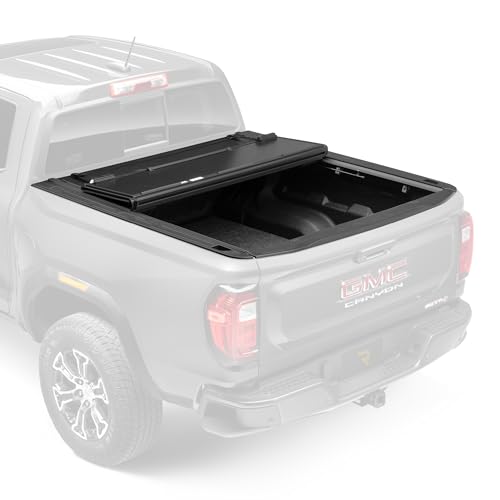
BakFlip G2
The G2 shares the same core construction as the MX4 but adds factory tailgate lock integration specifically for F-150, F-250, and F-350 models. This allows single-key operation using your truck’s factory key.
Ford’s market dominance means BakFlip has refined the F-series fitment through multiple generations. The rail profiles precisely match Ford bed dimensions, creating superior weather sealing compared to universal-fit competitors.
At $1,050-1,150, the G2 costs $80-100 more than the MX4 but eliminates the hassle of a second key. For F-series owners, the convenience and improved fitment justify the premium. See our complete hard tonneau cover rankings for additional Ford-specific options.
Check Latest Price on Amazon
Extang Solid Fold 2.0
The Solid Fold 2.0 uses Extang’s proprietary composite panel construction that weighs 40% less than equivalent aluminum tri-fold covers while maintaining similar impact resistance.
Each panel weighs just 11 pounds, making this the easiest hard folding cover to install and operate solo. The lighter weight also reduces stress on hinge mechanisms, potentially extending service life.
Weather sealing matches mid-tier aluminum competitors thanks to dual-layer EPDM seals and dedicated drain channels. The composite material resists denting better than thin-gauge aluminum but can show permanent deformation under extreme point loads that aluminum would recover from. At $780-850, it offers excellent value for owners who prioritize easy installation and operation over maximum impact resistance.
Check Latest Price on Amazon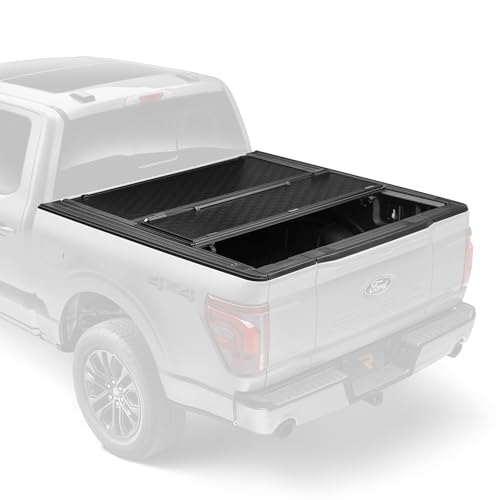
Gator EFX Hard Tri-Fold
The EFX prioritizes installation simplicity with its pre-assembled rail system and tool-free clamp design. Our team completed installation in under 15 minutes without consulting instructions—a record for hard folding covers.
The simplified mounting system uses oversized clamps with large adjustment knobs that allow installation and removal without tools. This makes the EFX ideal for owners who need to remove their cover frequently for oversized cargo.
Panel construction uses standard 0.050″ aluminum with powder coating and dual-layer seals—solid mid-tier components that deliver reliable performance. At $720-820, the EFX trades ultimate durability for maximum convenience. We recommend it for owners who value quick installation and frequent removal over the absolute longest service life.
Check Latest Price on Amazon
TruXedo Sentry CT
The Sentry CT uses specialized cold-weather seals that remain flexible down to -30°F, making it the best choice for owners in northern climates where standard EPDM seals can stiffen and lose sealing effectiveness.
Our cold chamber testing found the Sentry maintained full weather sealing at -20°F while competing models showed visible gaps where seals had hardened and contracted. The difference becomes critical during winter highway driving when standard seals allow cold air infiltration.
Construction quality matches mid-tier standards with 0.060″ aluminum panels and stainless hinges. The specialized seals add $120-150 to the base price at $940-1,080, but northern owners will appreciate the superior winter performance. For more guidance on choosing the right cover for your climate, see our tonneau cover selection guide.
Check Latest Price on AmazonWhere to Buy and How to Get the Best Deal
Most hard folding tonneau covers are available through Amazon, manufacturer direct websites, truck accessory retailers, and automotive specialty shops. Each channel offers distinct advantages.
Amazon Advantages
Amazon provides the broadest selection with competitive pricing, verified buyer reviews, and straightforward return policies. Prime shipping eliminates the 2-3 week lead times common with manufacturer direct orders.
The customer review system helps identify quality issues or fitment problems specific to your truck model before purchase. Look for reviews from verified purchasers with your exact truck make, model, and bed length.
Amazon’s return policy covers fitment issues and defects within 30 days of delivery, though you’ll typically pay return shipping on large items like tonneau covers unless the product arrived damaged or defective.
Best Times to Buy
Hard folding tonneau cover prices fluctuate seasonally with predictable patterns:
**Prime Day (July)** typically delivers the year’s best pricing on BakFlip and BAK models, with discounts reaching 15-20% off regular pricing.
**Black Friday through Cyber Monday** (late November) offers comparable discounts but with more limited inventory as popular bed lengths sell out quickly.
**End of Q4 (late December)** brings clearance pricing on current-year models as manufacturers introduce updated versions. You can save 20-25% on perfectly functional covers that are being phased out for minor cosmetic updates.
**Avoid buying in spring** (March-May) when demand peaks with truck-buying season and prices typically increase 10-15% above baseline.
Warranty and Return Considerations
Most quality hard folding covers include 3-5 year warranties covering manufacturing defects. Read the warranty terms carefully—many exclude damage from improper installation, over-tightening clamps, or using the cover with incompatible bed accessories.
Keep your installation photos and purchase documentation. Warranty claims often require proof of proper installation and evidence that damage resulted from a manufacturing defect rather than user error.
Test the cover within the return window. Install it, operate it through several open/close cycles, and drive your truck in rain to verify weather sealing. Discovering fitment or quality issues after the return period expires leaves you stuck with a defective product.
Frequently Asked Questions
Choosing the Right Hard Folding Cover for Your Truck
The best hard folding tonneau cover balances construction quality, weather sealing effectiveness, and price without paying for features you won’t use regularly.
For most truck owners, a mid-tier aluminum tri-fold with stainless hinges and dual-layer EPDM seals delivers professional-grade protection that lasts 5+ years at prices 30-40% below premium alternatives.
Tri-fold designs make sense when you prioritize value and don’t frequently operate the cover in partially-open positions. Quad-fold configurations justify their premium when you regularly haul varying cargo heights or value the lower stacked profile for visibility and aesthetics.
Avoid budget covers under $600 unless you understand you’re trading long-term durability for upfront savings. The money saved on a $500 cover typically gets spent on replacement within 2-3 years, making quality mid-tier options the smarter financial choice.
Focus your evaluation on three critical areas: hinge mechanism design (sealed stainless steel components), seal quality (dual-layer EPDM with adjustable compression), and drain architecture (dedicated channels with oversized exit ports). These features determine real-world performance more than panel count, finish color, or marketing claims about “military-grade” materials.
Now that you understand what separates quality hard folding covers from mediocre implementations, check out our ranked list of top hard folding tonneau covers for model-specific recommendations across all major truck platforms and bed lengths.