
The Tonneau Cover may earn a commission from Amazon purchases — at no extra cost to you. Our recommendations reflect our team’s evaluation, not affiliate payouts. Full disclosure →
Complete Front Opening Tonneau Cover Guide for 2026

Front opening tonneau covers revolutionize truck bed access by allowing you to reach cargo from the cab side rather than climbing into the bed from the tailgate. These innovative covers fold forward in multiple panels, creating a stacking configuration that gives you immediate access to items stored near the cab without removing the entire cover. Unlike traditional tonneau covers that require you to walk to the rear of your truck, front-access designs let you grab tools, gear, or equipment while standing beside the driver’s door.
The 2026 market offers several distinct approaches to front-opening functionality, from budget-friendly tri-fold designs to premium multi-panel systems with reinforced aluminum construction. Understanding which tonneau cover design matches your workflow determines whether you’ll enjoy convenient daily access or struggle with an ill-suited configuration. This guide examines every aspect of front-opening covers, from panel mechanics and weatherproofing to cargo management strategies that maximize your truck’s utility.
What This Guide Covers
- Types of Front Opening Covers
- Key Features to Consider
- Common Buying Mistakes
- Budget Recommendations
- Frequently Asked Questions
Types to Know Before You Buy
Tri-Fold Front Access
Three-panel designs that fold forward in sections, with the front panel opening first to provide quick access to the cab-side portion of your bed. The remaining panels stack on top when fully opened.
Pros
- Simplest operation with minimal moving parts
- Most affordable front-access option
- Lightweight design maintains fuel economy
- Easy one-person installation in under an hour
Cons
- Limited partial access compared to multi-panel systems
- Vinyl materials less durable than aluminum
- Lower weight capacity on stacked panels
- Weatherproofing varies significantly by brand
Quad-Fold Aluminum
Four reinforced aluminum panels that fold forward sequentially, allowing progressive access from front to rear with each panel supporting substantial weight when stacked.
Pros
- Superior strength supports up to 400 pounds distributed weight
- Excellent weather seals between aluminum sections
- Multiple access configurations without full removal
- Low-profile design maintains aerodynamics
Cons
- Higher price point than tri-fold alternatives
- Heavier panels require more effort to operate
- Complex hinge systems need periodic maintenance
- May interfere with certain cab-mounted accessories
Retractable Front-Mount
Canister-based systems mounted at the cab end that roll forward into a housing, providing complete bed access while maintaining a sleek profile when closed.
Pros
- Total bed access without removing any components
- Premium appearance with flush-mount design
- Quick operation via pull handles or power assist
- No panels to stack or fold manually
Cons
- Canister reduces usable bed length by 10-12 inches
- Highest cost among front-access options
- Complex installation often requires professional help
- Limited aftermarket support for older truck models
Hybrid Flip-and-Roll
Combines folding front panels with a rolling rear section, offering front access through panel folding while the rear portion retracts into a compact canister.
Pros
- Versatile access from both cab and tailgate
- Smaller canister than full retractable systems
- Front panels provide walk-on surface when needed
- Good balance of features and cost
Cons
- More complex operation requires learning two mechanisms
- Potential failure points in both folding and rolling components
- Moderate bed space loss to rear canister
- Limited brand options in this category
Low-Profile Hard Fold
Sleek multi-panel hard covers designed to sit nearly flush with bed rails, folding forward with minimal height increase when stacked for a streamlined appearance.
Pros
- Superior aerodynamics reduce wind noise and drag
- Premium materials resist fading and impact damage
- Maintains truck’s factory lines and appearance
- Integrated drainage channels prevent water pooling
Cons
- Reduced panel thickness limits load-bearing capacity
- Higher cost for aesthetic benefits
- Some models require specific bed rail systems
- Limited color matching for certain truck finishes
Key Features to Evaluate
Sequential Panel Release
Advanced latch systems that allow you to open just the front panel for quick access or release additional panels progressively as needed, providing flexibility without full deployment.
Reinforced Hinge Architecture
Heavy-duty hinge assemblies with stainless steel pins and sealed bearings that maintain alignment through thousands of open-close cycles while supporting weight when panels are stacked.
Automatic Tension Adjustment
Self-adjusting clamp mechanisms that compensate for temperature changes and material expansion, maintaining consistent sealing pressure across all panels throughout seasonal variations.
Integrated Panel Stops
Built-in limiters that prevent panels from over-rotating during opening, protecting hinge systems from stress damage while ensuring panels stack properly without manual alignment.
Dual-Density Weatherstripping
Two-layer seal systems combining firm outer edges for structural contact with soft inner foam that compresses to fill gaps, creating superior water and dust barriers.
Load Distribution Rails
Structural reinforcement channels that spread weight across panel surfaces when closed or stacked, allowing you to safely place cargo on the cover or stand on panels during access.
Common Mistakes to Avoid
Recommendations by Budget
Budget
$300 – $600Vinyl tri-fold designs offering basic front access functionality with adequate weather resistance for recreational use.
 Top Pick Budget
Extang Solid Fold 2.0
Durable tri-fold construction with heavy-duty vinyl panels and aluminum support bars provides reliable front access at an accessible price point. The reinforced hinges fold forward smoothly while maintaining a low profile that preserves fuel economy and doesn’t interfere with most cab accessories.
Check Price on Amazon Lower profile aesthetic
TruXedo Lo Pro
Sleeker design sits flush with bed rails while maintaining tri-fold front access, ideal for appearance-focused buyers on a budget.
Check Price on AmazonMid-Range
$700 – $1,100Aluminum quad-fold systems balancing durability, weather protection, and front-access convenience for daily drivers.
 Top Pick Mid-Range
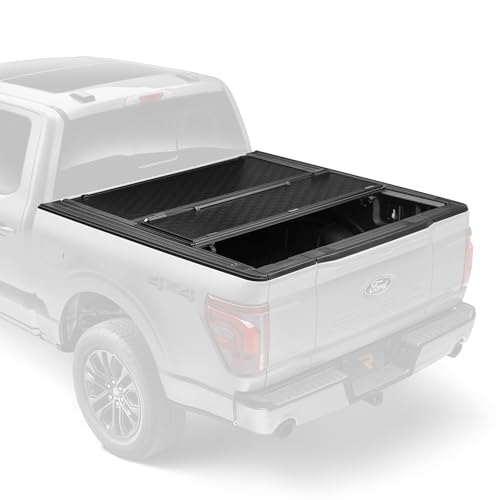
Gator EFX
Four-panel aluminum construction delivers excellent front-to-rear access flexibility with reinforced panels supporting distributed loads up to 300 pounds. The integrated drain channels and premium EPDM seals provide superior weather protection, while the matte finish resists scratches and maintains appearance through years of use in demanding conditions.
Check Price on Amazon Enhanced security focus
Lund Genesis
Features reinforced locking mechanisms and thicker aluminum panels for improved theft deterrence compared to standard mid-range options.
Check Price on Amazon Maximum flexibility
UnderCover Armor Flex
Five-panel design offers more granular access control and finer increments of bed opening than traditional quad-fold configurations.
Check Price on AmazonPremium
$1,200 – $1,600Top-tier aluminum systems with advanced features, superior build quality, and industry-leading warranties for demanding professional use.
 Top Pick Premium
BAKFlip MX4
Premium aluminum quad-fold design sets the standard for front-opening covers with aircraft-grade panels supporting up to 400 pounds of evenly distributed weight. The proprietary hinge system operates smoothly through extreme temperature ranges while maintaining precise panel alignment, and the dual-action tailgate seal prevents water intrusion even during pressure washing. For those seeking the ultimate in front access performance, the BAKFlip MX4 delivers exceptional value despite its higher price point.
Check Price on Amazon Maximum durability needs
BAKFlip F1
The fiberglass-reinforced F1 construction offers enhanced impact resistance and longer service life for commercial fleet applications.
Check Price on Amazon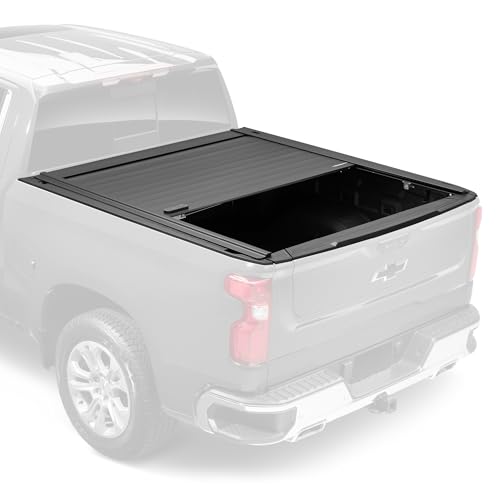 Canister retractable preference
Retrax PRO MX
Premium rolling design provides complete bed access from the front without stacking panels, though the canister reduces bed length by 12 inches.
Check Price on AmazonFrequently Asked Questions
Most quality front-opening tonneau covers feature sequential latch systems that allow you to release only the front panel for quick cab-side access. This partial opening provides immediate access to the forward 2-3 feet of your bed without deploying the remaining panels, making it ideal for grabbing frequently used items. Lower-end models may require you to unlatch multiple panels simultaneously, so verify the specific latch configuration before purchasing if this feature is important to your workflow.
Weight capacity varies dramatically by construction quality and panel count. Budget vinyl tri-folds typically support 150-200 pounds distributed across the surface when closed, while premium aluminum quad-folds like the BAKFlip MX4 handle 400 pounds or more. Manufacturers specify these ratings for evenly distributed static loads on a closed cover—concentrated point loads or dynamic impacts can cause damage even below the rated capacity. Always check your specific model’s documentation and avoid standing near panel edges where support is weakest.
Compatibility depends on hitch type and cover design. Most folding front-access covers work fine with removable gooseneck balls and flush-mount fifth-wheel systems when the hitch components are removed. However, fixed gooseneck installations or raised fifth-wheel rails may interfere with panel stacking when the cover is opened. Measure your hitch height and the cover’s stacked panel clearance requirement, typically 8-12 inches above the bed floor, to ensure compatibility before ordering.
Front-opening tonneau covers install on bed rails, not the bed floor, so spray-in bedliners rarely cause fitment issues. Drop-in plastic bedliners that extend over the rail caps can prevent proper clamping and sealing, requiring liner modification or removal. Some manufacturers offer rail adapter kits for specific bedliner brands, while others recommend trimming the liner’s rail cap coverage. Always verify compatibility between your specific liner and cover models, as improper installation compromises both weather sealing and security.
Hinge longevity depends on regular cleaning and lubrication every 3-4 months or after exposure to mud, salt, or road grime. Use a soft brush to remove debris from hinge pins and pivot points, then apply silicone-based lubricant—never petroleum products that can degrade seals and weather stripping. Inspect hinge alignment during cleaning and adjust tension clamps if panels don’t stack evenly. Most premium covers like the Gator EFX use sealed bearing hinges that require minimal maintenance, while budget models with exposed pins need more frequent attention to prevent corrosion and binding.
Most front-opening folding covers are designed for DIY installation requiring only basic hand tools and 30-60 minutes. The process involves positioning clamps on bed rails, adjusting tension, and verifying panel alignment—no drilling or permanent modifications. Retractable canister systems demand more complex installation with precise alignment and often benefit from professional installation to ensure proper operation. Understanding installation requirements upfront helps you budget time and potential labor costs accurately.
Quality front-opening covers use integrated locking mechanisms and tension-adjusted clamps that prevent panels from lifting during highway speeds. The aerodynamic design of folding panels actually creates downward pressure at speed, improving stability compared to roll-up covers. However, improperly secured latches or worn weather stripping can allow wind infiltration that generates lift. Always verify all panel latches are fully engaged before driving, and periodically inspect latch function and seal condition to maintain secure operation at all speeds.
Security levels match those of comparable rear-opening designs when properly latched. Multi-panel aluminum covers with integrated locks offer excellent deterrence against casual theft, while the multiple latch points across panels make forced entry more difficult than single-latch systems. However, no tonneau cover provides the security of a locking truck cap—determined thieves can defeat any soft or folding cover given enough time and tools. For maximum protection, combine a front-opening cover with additional bed security measures like locking tie-downs or a bed-mounted safe for valuable items.