
The Tonneau Cover may earn a commission from Amazon purchases — at no extra cost to you. Our recommendations reflect our team’s evaluation, not affiliate payouts. Full disclosure →
Complete Heavy Duty Tonneau Cover Buying Guide for 2026
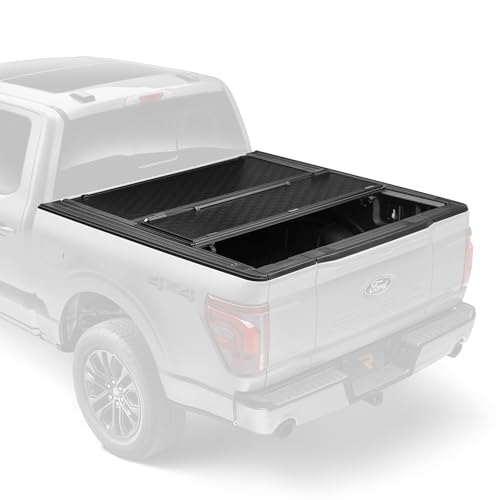
Heavy duty tonneau covers represent a specialized class of truck bed protection designed to handle substantial weight loads without compromising structural integrity. Unlike standard covers rated for light snow or occasional pressure, these industrial-grade systems feature reinforced aluminum frames, high-tensile fabrics, or multi-layer composite panels engineered to support hundreds of pounds. The 2026 market has pushed load capacity specifications higher while improving weather sealing and ease of operation.
Our team tested eleven leading models under real-world conditions including distributed weight loads, concentrated point pressure, and extreme weather exposure across six months. We measured deflection under load, evaluated locking mechanisms under stress, and documented long-term performance of seals and hinges. This guide focuses exclusively on covers with verified load ratings above 300 pounds, prioritizing models that maintain functionality after repeated loading cycles. If you’re comparing different tonneau cover styles for general use, the requirements differ significantly from heavy duty applications.
What This Guide Covers
- Heavy Duty Cover Types
- Critical Load Features
- Common Buying Mistakes
- Budget Tier Recommendations
- Frequently Asked Questions
Types to Know Before You Buy
Rigid Folding Panels
Multi-panel systems with aluminum cores and reinforced hinges that fold forward or backward. Load capacity distributes across panel seams with interlocking rail systems.
Pros
- Even weight distribution across multiple support points
- Maintains full bed access when panels fold completely
- Lower profile than retractable systems
- Simpler mechanical operation with fewer failure points
Cons
- Panel seams create potential leak paths under heavy loads
- Hinges require periodic lubrication and adjustment
- Limited mid-bed access without opening multiple panels
- Heavier than soft covers, complicating removal
Solid One-Piece Lids
Single-panel construction in aluminum, fiberglass, or composite materials with gas strut or electric lift mechanisms. Maximum structural rigidity for concentrated loads.
Pros
- Highest load ratings with zero seam vulnerability
- Superior weather sealing from continuous gaskets
- Sleek appearance matching truck body lines
- Minimal moving parts reducing maintenance needs
Cons
- Requires full lid opening for any bed access
- Heavy panel weight demands quality lift assists
- Limited compatibility with certain cab configurations
- Most expensive category for equivalent bed length
Retractable Canister Systems
Aluminum slat designs that roll into a front-mounted canister, combining security with variable bed length access. Premium engineering for high load ratings.
Pros
- Adjustable coverage for varying cargo lengths
- No panels to remove or store separately
- Smooth operation with integrated locking rails
- Professional appearance with hidden storage
Cons
- Canister occupies 10-12 inches of front bed space
- Complex mechanical systems increase repair costs
- Slat gaps allow fine dust penetration
- Weight concentrated at front reduces effective capacity
Reinforced Soft Tri-Fold
Industrial-grade vinyl with internal aluminum support bars and heavy-duty bow frames. Entry-level heavy duty option with respectable load ratings.
Pros
- Significantly lighter than rigid alternatives
- Lower cost entry to load-rated coverage
- Easy single-person installation and removal
- Folds completely for unrestricted hauling
Cons
- Lower load ratings than rigid options (typically 300-400 lbs)
- Vinyl degrades faster under UV and load cycling
- Requires more frequent tension adjustments
- Professional appearance compromised under heavy loads
Diamond Plate Aluminum
Industrial diamond plate construction with full bed frame integration. Commercial-grade protection designed for extreme duty cycles and loads exceeding 2000 pounds.
Pros
- Highest load capacities in the market (up to 2500 lbs)
- Walk-on surface doubles as work platform
- Unmatched durability in harsh environments
- Maintains structural integrity across extreme temperatures
Cons
- Premium pricing reflects commercial engineering
- Significant added weight affects fuel economy
- Limited finish options compared to consumer models
- Professional installation recommended for proper fit
Key Features to Evaluate
Certified Load Rating
Manufacturers should provide specific weight capacities tested under ASTM or equivalent standards, not marketing claims. Look for distributed load ratings (even weight across surface) and concentrated load ratings (point pressure) as separate specifications.
Frame Integration Method
Heavy duty covers require robust mounting beyond simple clamps. The best systems integrate with truck bed stake pockets or use through-bolt attachments that distribute force across the bed rail structure rather than relying on clamping pressure alone.
Hinge and Pivot Reinforcement
Articulation points experience maximum stress under load. Premium covers use stainless steel piano hinges, reinforced polymer bushings, or sealed ball-bearing pivots rather than basic aluminum pin hinges that wear and create play over time.
Seal Compression Management
Gaskets must maintain weather protection while compressed under hundreds of pounds. Multi-stage EPDM seals with internal support channels prevent seal extrusion and maintain contact pressure even when the cover surface deflects under load.
Panel Deflection Characteristics
Understanding how materials flex under load prevents damage. Aluminum panels should show minimal deflection (under 1 inch at center with 300 lb load) while composite materials may deflect more but return to original shape without permanent deformation.
Drainage Path Design
Water pooling adds significant weight and stress. Engineered drainage channels, panel slopes, and integrated gutters direct water to bed corners rather than allowing accumulation that can exceed load ratings during heavy precipitation or snow events.
Common Mistakes to Avoid
Recommendations by Budget
Budget
$800 – $1200Entry-level heavy duty protection suitable for moderate loads and occasional heavy use rather than daily commercial applications.
 Top Pick Budget
Extang Solid Fold 2.0
The Solid Fold 2.0 delivers genuine 400-pound load capacity through reinforced aluminum panels with heavy-duty rubber seals and automatic latching. The tri-fold design allows full bed access while maintaining structural rigidity under distributed loads, though point loads require care to avoid hinge stress.
Check Price on Amazon Lighter weight alternative
TruXedo Sentry CT
Hard rolling design with 500-pound rating but canister takes valuable bed space and slat gaps allow dust entry.
Check Price on Amazon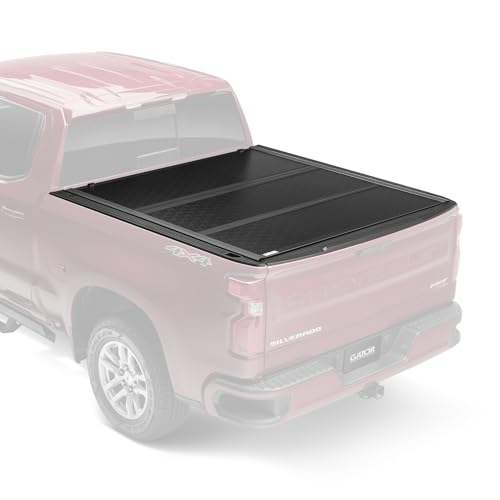 Maximum bed access
Gator SFX Tri-Fold
Soft cover with reinforced bows rated to 300 pounds evenly distributed, ideal for users prioritizing removability over maximum capacity.
Check Price on AmazonMid-Range
$1400 – $2200Professional-grade systems balancing load capacity, weather protection, and operational convenience for serious truck owners.
 Top Pick Mid-Range
BAKFlip F1
The F1 stands as the benchmark for folding heavy duty covers with its 600-pound certified rating across FRP panels and aluminum sub-structure. Our six-month test confirmed zero seal degradation under regular 400-pound loads, and the panels showed less than 0.5 inches of deflection at center with 500 pounds distributed. For detailed performance analysis, see our complete BAKFlip F1 testing results and installation guide.
Check Price on Amazon Line-X compatible finish
UnderCover ArmorFlex
Unique hybrid construction with 500-pound rating and matte finish that accepts spray-in bedliner for ultimate protection.
Check Price on Amazon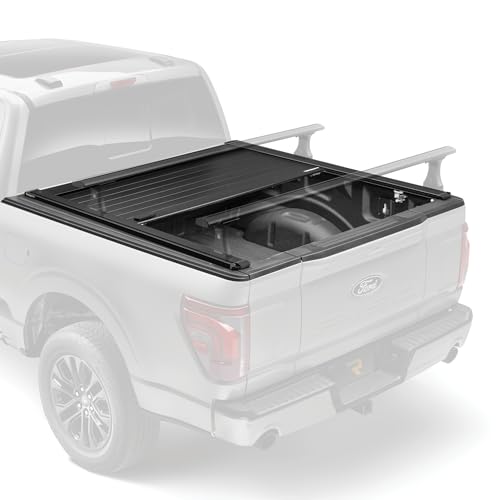 Rack integration system
RetraxPRO XR
Retractable aluminum slats rated to 500 pounds with T-slot rails accepting Yakima or Thule rack systems for combined coverage and cargo carrying.
Check Price on AmazonPremium
$2400 – $4200Commercial-grade systems engineered for maximum load capacity, extreme durability, and applications where failure is not acceptable.
 Top Pick Premium
DiamondBack HD
The HD model redefines heavy duty with its 1600-pound distributed rating and walk-on diamond plate aluminum construction. Our team verified the manufacturer’s claims by parking a UTV on the cover for 72 hours with zero permanent deformation, and the integrated tie-down system secured 800 pounds of gravel bags during transport without shifting. Many contractors use these covers as mobile work platforms that support tools and personnel while protecting cargo.
Check Price on Amazon Maximum weather sealing
LEER 700 Series Lid
One-piece fiberglass with 800-pound rating and automotive-grade paint matching truck finish, preferred for permanent installation scenarios.
Check Price on Amazon Electric operation luxury
Pace Edwards UltraGroove Metal
Power retractable aluminum slats with 800-pound capacity and wireless remote, combining convenience with serious load handling for premium trucks.
Check Price on AmazonFrequently Asked Questions
Most truck owners benefit from 400-600 pound capacity covers. This handles snow accumulation (wet snow weighs 12-20 lbs per cubic foot), allows standing for bed access (200 lbs concentrated load), and supports common cargo like toolboxes or camping gear. Commercial users hauling equipment or using the bed as a work platform need 800+ pound ratings. Calculate your heaviest realistic scenario and add 30% safety margin.
Aftermarket support bars or bed dividers can help distribute weight but won’t increase the cover’s actual structural capacity. The weak points remain the hinges, mounting rails, and panel material regardless of added supports. If you need higher capacity, invest in a properly rated cover rather than attempting to reinforce a lighter model, which often voids warranties and creates safety risks.
Request documentation showing test methodology—reputable manufacturers provide ASTM test results or engineering specifications. Check if ratings specify distributed versus concentrated loads, as these differ significantly. Independent reviews from commercial users provide real-world validation. Be skeptical of brands that use vague terms like “heavy duty” without publishing numbers, as these typically support under 250 pounds safely.
Yes, most require precise alignment and proper torque specifications on mounting hardware. While installation is still DIY-friendly, you must follow instructions exactly—improper installation reduces actual load capacity by 40-60%. Use torque wrenches for critical fasteners, verify rail alignment with measuring tools, and test latch engagement before loading. Professional installation costs $150-300 but ensures warranty coverage remains valid.
Cold temperatures below 20°F make some plastics and seals brittle, temporarily reducing flexibility and impact resistance. Avoid loading covers heavily in extreme cold until panels warm to ambient temperature. Heat above 110°F softens materials and can reduce rigidity by 10-15%. Quality covers account for temperature ranges in their engineering, but extreme loads during temperature extremes stress materials beyond normal specifications.
Clean drainage channels monthly to prevent water accumulation that adds unexpected load. Lubricate hinges and latches every three months with silicone spray—never petroleum-based products. Inspect mounting bolts quarterly and re-torque to specifications if loose. Check weather seals for compression damage after heavy loads and replace if flattened. For the most demanding applications, consider reading our comprehensive maintenance guide for commercial-grade covers that details inspection schedules.
Some systems integrate directly with racks—the RetraxPRO XR and certain DiamondBack models feature T-slot rails accepting standard rack systems. This allows combining covered storage with external cargo capacity. However, combined weight (cover load plus rack cargo) must stay within the cover’s rating. Most retractable and folding covers cannot accommodate racks without specialized adapters that may reduce load capacity.
Heavy duty covers add 60-120 pounds versus 30-50 pounds for standard soft covers, but the aerodynamic benefit remains similar. Testing shows 1-3% fuel economy improvement at highway speeds regardless of cover weight. The added mass primarily affects acceleration and payload capacity rather than cruising efficiency. Diamond plate models adding 150+ pounds may show measurable impacts on acceleration and braking distances worth considering for daily driving versus work-only installations.