
The Tonneau Cover may earn a commission from Amazon purchases — at no extra cost to you. Our recommendations reflect our team’s evaluation, not affiliate payouts. Full disclosure →
Complete Tonneau Cover & Wheel Well Toolbox Compatibility Guide for 2026

Wheel well toolboxes occupy the narrow spaces above your truck’s rear wheel arches, preserving valuable center bed space while keeping essential tools secure. Finding a tonneau cover that accommodates these low-profile storage units requires understanding clearance requirements, rail positioning, and how different cover mechanisms interact with raised corners. The 2026 truck accessory market offers several proven solutions that deliver both security and accessibility without forcing you to choose between bed coverage and corner storage.
Modern wheel well toolboxes typically rise 10-14 inches from the bed floor, sitting entirely within the wheel arch cavity. Most premium tonneau covers clear these obstacles through strategic rail design, but installation approaches vary significantly between roll-up, folding, and retractable systems. This guide examines the specific compatibility requirements for wheel well storage configurations, detailing which cover styles maintain full functionality while protecting your center cargo area from weather and theft.
What This Guide Covers
- Types of Compatible Covers
- Essential Features
- Common Installation Mistakes
- Budget Recommendations
- Frequently Asked Questions
Types to Know Before You Buy
Hard Rolling Covers
Aluminum slat construction with low-profile rails that mount inboard of wheel wells. Retracts toward the cab, leaving wheel well areas completely accessible when opened.
Pros: Rails mount high enough to clear standard wheel well boxes, Complete bed access when retracted, Lockable security for center cargo area, Weather-tight seal along center bed section. Cons: Premium pricing compared to soft covers, Canister occupies 10-12 inches of cab-end bed space, Limited stackable cargo height when closed, Requires precise rail alignment during installation. Best for: Users needing daily access to both wheel well tools and center bed cargo ($1,200 – $1,800).
Hard Folding Covers
Multi-panel aluminum construction with side rails positioned to avoid wheel well interference. Panels fold against the cab or stack upright for partial bed access.
Pros: Panels fold without impacting wheel well boxes, Flush mount maintains factory bed rail appearance, Superior load capacity on closed panels, Can open partially for tall cargo in center bed. Cons: Stacked panels reduce usable bed length when open, Heavier than soft alternatives, More complex installation with multiple clamps, Higher wind resistance when driving with panels folded. Best for: Contractors balancing security needs with versatile cargo configurations ($900 – $1,400).
Retractable Covers
Polycarbonate or aluminum slats that retract into a canister mounted against the cab. Premium clearance design accommodates raised wheel well corners without rail modification.
Pros: Completely disappears when retracted, Zero interference with wheel well storage, Strongest security with key-lock mechanisms, Excellent weather protection with integrated seals. Cons: Highest price category, Canister permanently occupies 13-15 inches of bed space, Professional installation often recommended, Limited aftermarket support for canister repairs. Best for: Users prioritizing maximum security and premium aesthetics ($1,600 – $2,400).
Soft Folding Covers
Vinyl-covered panels on aluminum frames with adjustable rail systems. Rails position inboard of wheel wells while maintaining tension across the center bed area.
Pros: Budget-friendly entry point, Lightweight installation without drilling, Rails easily adjusted to clear wheel well boxes, Folds completely for unrestricted bed access. Cons: Vinyl surface vulnerable to punctures, Less weather-tight than hard covers, Minimal security deterrent, Fabric stretches over time affecting fit. Best for: Recreational users prioritizing affordability and weight reduction ($400 – $800).
Key Features to Evaluate
Inboard Rail Mounting
Side rails that attach inside the bed rail channel rather than on top, creating clearance for wheel well box lids to open without hitting the cover frame. This design maintains full access to corner storage while keeping the cover functional.
Adjustable Clamp Positioning
Installation clamps that slide along the rail to avoid wheel well box locations, allowing you to position hardware in the straight bed sections while skipping over raised corners. Critical for achieving proper tension without interference.
Front-to-Back Operation
Covers that open toward the cab rather than the tailgate, ensuring the retracted or folded cover never stacks over wheel well areas. This maintains permanent access to your corner toolboxes regardless of cover position.
Low-Profile Seal Design
Weather seals engineered to compress minimally, reducing the vertical space required between the cover surface and bed floor. Essential for maintaining water resistance while clearing wheel well box lids that sit 10-14 inches high.
Modular Panel Configuration
Folding systems with independently operating panels that can open partially without exposing wheel well areas. Allows access to center bed cargo while keeping corner toolboxes protected and secure under closed end panels.
Reinforced Corner Clearance
Structural elements specifically designed to span the gap over wheel wells without sagging or requiring mid-span support. Maintains cover integrity and appearance even with large voids beneath the corner sections.
Common Mistakes to Avoid
Recommendations by Budget
Budget
$400 – $800Soft folding covers with adjustable rails that accommodate wheel well toolboxes through flexible positioning and lightweight construction.
 Top Pick Budget
Extang Solid Fold 2.0
This tri-fold soft cover uses heavy-duty vinyl over aluminum panels with side rails that mount inboard of wheel wells. The adjustable clamp system lets you skip mounting points occupied by toolboxes while maintaining proper tension across the center bed. Weather seals compress to just 0.75 inches, providing excellent clearance over raised corners while delivering solid water resistance for recreational and light commercial use.
Check Price on Amazon Ultralight installation
TruXedo TruXport
Roll-up design with minimal rail height that clears most wheel well configurations. Tension bow system adjusts to avoid toolbox locations, though weather protection falls below hard panel alternatives.
Check Price on Amazon Entry-level hardshell
Tyger Auto T3 Tri-Fold
Affordable aluminum panels with matte finish and low-profile latches. Rails position inboard adequately for standard wheel well boxes, delivering hard cover benefits at soft cover pricing.
Check Price on AmazonMid-Range
$900 – $1,400Hard folding and rolling covers engineered specifically for accessory compatibility, balancing security with practical wheel well clearance.
 Top Pick Mid-Range
BAK Revolver X4S
This hard rolling cover features aircraft-grade aluminum slats on a low-profile rail system designed explicitly for toolbox compatibility. Rails mount flush inside the bed rails, clearing wheel well boxes by 3 inches even when lids swing fully open. The automatic latch system engages at any position along the bed, letting you secure partial loads while maintaining wheel well access. Understanding truck bed tool box placement options helps maximize this cover’s versatile operation, particularly when combining multiple storage solutions across different bed zones.
Check Price on Amazon Extreme durability
UnderCover Armor Flex
Five-panel folding system with FRP construction rated for 500-pound loads. Reinforced corner sections span wheel wells without mid-support, maintaining structural integrity over storage voids.
Check Price on AmazonPremium
$1,600 – $2,400Top-tier retractable systems with zero wheel well interference, offering maximum security and weather protection alongside permanent corner storage access.
 Top Pick Premium
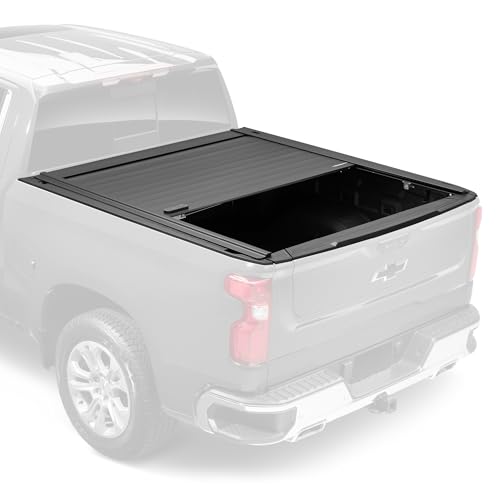
RetraxPRO MX
This retractable aluminum cover represents the ultimate solution for wheel well toolbox compatibility, completely retracting into a sealed canister that mounts against the cab. The rail-free bed sides mean zero interference with wheel well storage—boxes open and close freely regardless of cover position. Matte black aluminum slats deliver superior strength while the key-lock mechanism provides security matching aftermarket tonneau systems. The sealed canister design protects internal components from debris and moisture, crucial when working around dusty construction sites or off-road environments where wheel wells accumulate significant dirt.
Check Price on Amazon Integrated LED lighting
Pace Edwards UltraGroove Metal
Retractable metal cover with optional LED rail lights illuminating the bed. Canister design ensures wheel well boxes remain accessible while proprietary keyed system offers excellent theft deterrence.
Check Price on Amazon Rack compatibility
Roll-N-Lock M-Series
Retractable cover supporting up to 1,000 pounds with integrated track system for cargo management rails. Completely clears wheel wells when open and provides unmatched versatility for professional contractors.
Check Price on AmazonFrequently Asked Questions
Yes, but you must select covers specifically designed for toolbox compatibility. Hard rolling covers like the BAK Revolver X4S and retractable models mount with rails positioned inboard of wheel wells, clearing standard boxes by 2-3 inches. Measure your toolbox height with lids fully open, then verify the cover’s rail mounting position provides adequate clearance. Avoid covers requiring stake pocket mounting in wheel well areas, as toolboxes typically occupy these attachment points.
Most manufacturers maintain warranty coverage when wheel well boxes are present, provided you install the cover according to specifications without modifying rails or clamps to force fit. Document your bed configuration with photos during installation and verify that your specific toolbox model appears on the manufacturer’s compatibility list. Some premium brands like Retrax explicitly design for multi-accessory setups and include toolbox configurations in their warranty terms.
Maintain at least 1.5 inches of clearance between the underside of tonneau rails and the top of wheel well toolbox lids in their fully open position. This accounts for cover flex under load, thermal expansion of materials in summer heat, and manufacturing tolerances. Measuring with toolbox lids propped open prevents discovering interference issues after installation. Covers with adjustable rail systems allow fine-tuning this clearance during setup.
Folding covers that stack toward the cab (front-folding designs) keep panels away from wheel well areas when open, maintaining full toolbox access. Rear-folding models stack panels over the tailgate area but may interfere with wheel well boxes depending on panel length and fold configuration. The Extang Solid Fold 2.0 uses a cab-stacking design specifically to avoid this issue. When researching tonneau cover toolbox compatibility factors, prioritize models with front-folding operation for maximum versatility.
Soft roll-up covers work with wheel well boxes if rails mount high enough to clear lids, but they offer less security and weather protection than hard alternatives. The primary advantage lies in their extremely low-profile rails (often under 1 inch tall) that rarely contact toolbox lids. However, the rolled cover bundles against the cab, potentially limiting access to that bed area. For 2026 applications, hard rolling covers provide better long-term value with comparable installation simplicity.
Most clamp-on systems install as DIY projects within 45-60 minutes, though wheel well configurations require extra attention to rail positioning and clearance verification. Retractable covers like the RetraxPRO MX benefit from professional installation due to canister mounting complexity and precise rail alignment requirements. If you’re comfortable using basic hand tools and can accurately measure clearances, hard folding and rolling covers install successfully without professional help. Professional installation typically costs $150-300 but includes warranty protection for setup errors.
Properly installed covers maintain full wheel well toolbox access regardless of whether the tonneau is open or closed. Rails mount inboard of the wheel wells, leaving corner areas completely unobstructed. You can open toolbox lids, retrieve tools, and close them again without moving the tonneau cover. This independent operation distinguishes wheel well storage from crossover toolboxes, which often require removing or opening the tonneau cover for access.
Rails contacting toolbox lids prevent proper installation and void most manufacturer warranties due to improper fit. If you discover interference during installation, stop immediately and verify you have the correct cover model for your truck’s bed length and configuration. Some covers offer rail height adjusters or alternative mounting positions. In cases where the cover genuinely doesn’t fit your toolbox setup, return it within the retailer’s window rather than forcing installation that compromises both the cover’s function and your toolboxes’ accessibility.